Meeting Seasonal Workers Where They Are: What We Learned at Our First Event
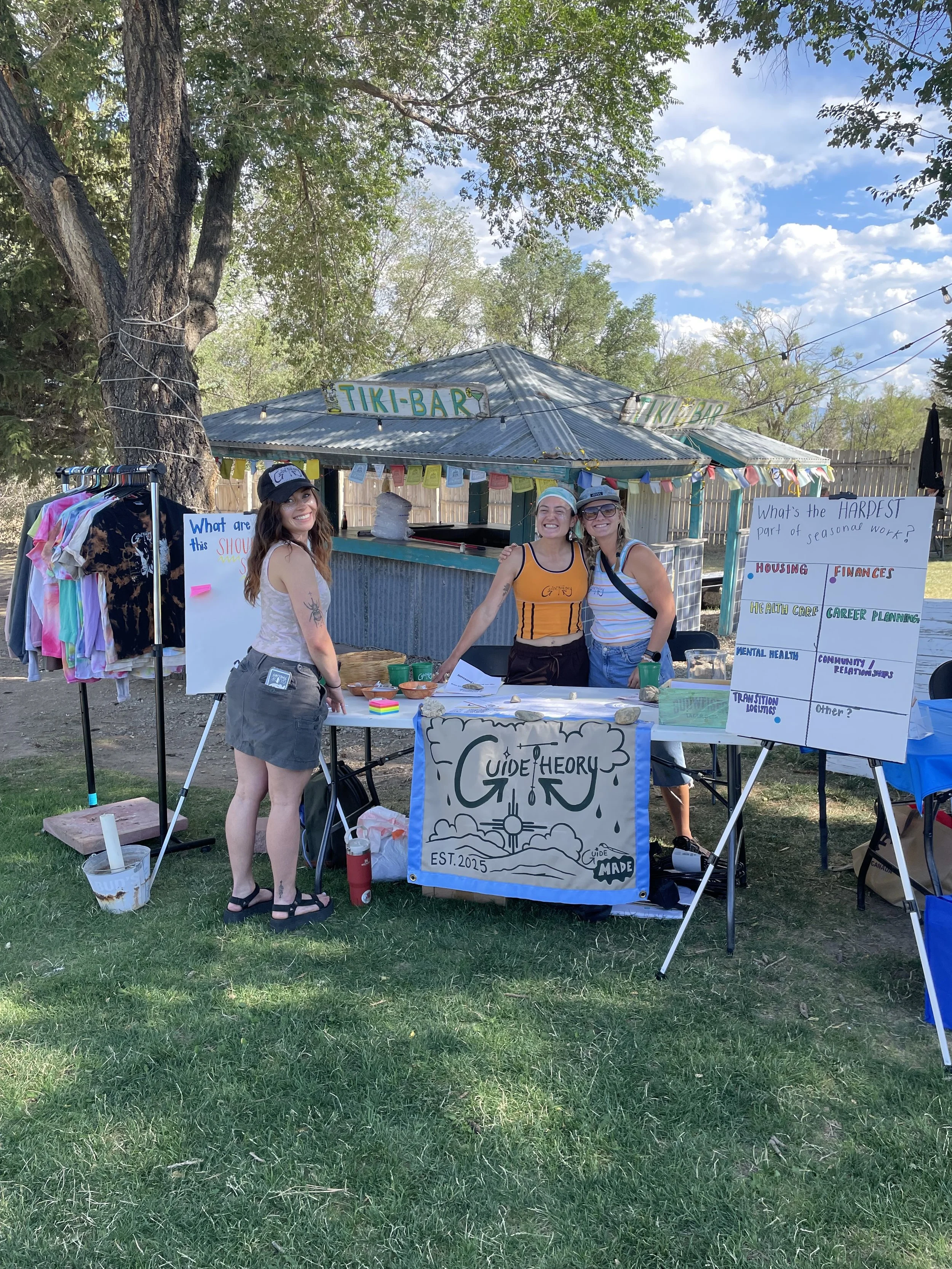
On July 31, Guide Theory set up a booth at KTAO's Friday Night Volleyball in Taos. We showed up where seasonal workers already gather and asked one real question:
What's actually hard about this life?
We didn't hand out a long survey. We put up two poster boards: a dot voting board asking "what's the hardest part of seasonal work?" and a write-in wall asking "what are you doing this shoulder season?" And we brought Mary Walker, Benefit Navigation Coordinator at Holy Cross Medical Center, to sit right next to us all night - because listening only gets you so far if you can't also point people toward something real.
What We Learned
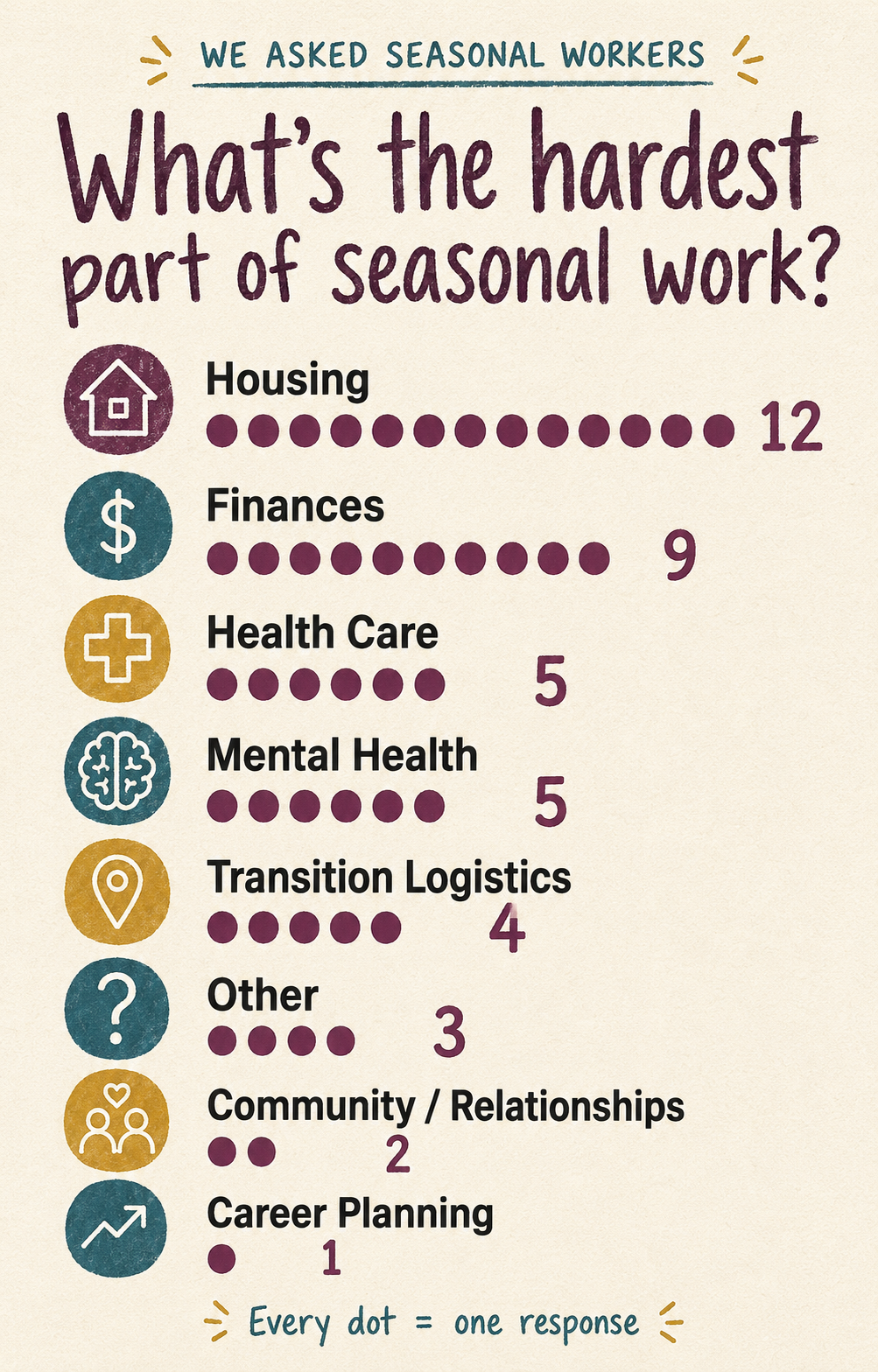
By the end of the night, 40 dot votes were in. Housing was the runaway winner — 12 votes, 30% of everyone who voted, more than any other single category. Finances came in second on the board, but on the fuller intake forms, where people could name every challenge that applied to them, finances showed up for 9 of the 10 people who filled one out — more than anything else.
Housing is the crisis that hits people all at once. Finances is the strain that's always running underneath it, seasonal or not. One person put it plainly:
"Sucks to have so much experience yet still be so broke! Retirement and future planning."
Mental health and burnout, health care, and transition logistics rounded out the list — and in conversation after conversation, the same pattern showed up: people didn't know what they qualified for, or where to start.
The Resource That Mattered Most
The single biggest thing we learned seasonal workers need someone next to them who can answer a specific question, on the spot, at an event they were already going to.
Having Mary Walker at the table turned "you should look into that" into an actual conversation. And most of those conversations came back to the same handful of things outfitters and local orgs could be doing right now:
Unemployment between seasons. Most seasonal workers don't realize they can apply for unemployment insurance during their off-season, and many never do. A simple flyer at the end of a season — "here's the link, apply within your first 30 days off" — closes a gap that costs people real money.
Medicaid eligibility. Seasonal, fluctuating income makes people assume they don't qualify. Often they do, especially in a shoulder season with little or no pay. A five-minute conversation with someone who knows the actual thresholds can change that.
Residency and documentation. For workers without a fixed address, something as simple as a PO box (which can be split with roommates or crew) is often the first practical step toward establishing residency — which unlocks state benefits, sometimes within a day.
A warm handoff to Workforce Solutions. In-person help with job searches and unemployment paperwork exists locally — most seasonal workers just don't know to walk in the door.
None of this requires a big budget or a formal program. It requires showing up where your crew already is, and having one person on hand who actually knows the answers.
A Simple Playbook for Outfitters and Local Orgs
If you run an outfit, a shop, or a community org that seasonal workers pass through, here's what worked for us and what we'd hand to anyone trying this themselves:
Go to them, not the other way around. We didn't ask people to attend a workshop — we set up inside an event they were already at.
Bring a real person with real answers. A benefits navigator, a Workforce Solutions rep, a county resource contact — someone who can turn a question into an action, not just a referral.
Ask one honest question and actually listen. Ours was "what's the hardest part of seasonal work?" Simple, low-pressure, and it told us exactly where to focus.
Make the ask concrete. "Apply for unemployment in your first 30 days" beats "we offer resources." Specific instructions get used; general goodwill doesn't.
Thank You
None of this happens without the people who showed up to build it:
KTAO, for hosting us inside Friday Night Volleyball and giving us a room full of people already there
Mary Walker and Holy Cross Benefit Navigation,for bringing real expertise and resources we couldn't offer ourselves
LOR Foundation, for backing this first event with a $500 sponsorship
Channel 72, for venue coordination and marketing support
Kaia and Owen of Cold Hands, for bringing our shirts and banner to life
Ali Kostik, Hailey Stern, and Sam Woiwood, for running the booth and capturing the night
And thank you to everyone who stopped by to vote, write a note, or just talk.
What's Next
Housing and finances are going to anchor our next round of programming, and we're building out the resource list above into something outfitters and local orgs can actually use. If you run a crew and want to bring this model to your team, or you're an org that could be the "Mary Walker" at our next event — reach out. This works better with more of you in the room!